From Six-Figure Debt to Financial Independence: A Practice Owner's Journey
Join financial planner Tyler Day as he interviews an optometry practice owner on real estate, mutual funds, and achieving financial freedom as a business owner.
Have you ever wondered what it actually takes to completely turn your financial life around in just over a decade?
Imagine starting your career staring down a massive, overwhelming hole—a net worth of negative $750,000 to be exact. That’s the kind of number that would keep most of us up at night. But what if I told you it is possible to completely flip that script over the course of a decade?
Recently, I had the chance to sit down with an optometrist and the co-owner of an optometry practice here in Georgia. I wanted to get into the weeds on exactly how he pulled this off.
Spoiler alert: he didn’t get lucky picking penny stocks or timing the crypto market.
Instead, we had an incredibly honest conversation about his upbringing, the lifelong lessons he learned from experiencing "forced scarcity" as a kid, and why defining exactly how much money is "enough" might just be the most important financial move you can make. Marcus didn't hold back—he shared the gritty details of his journey, his exact allocation between real estate and mutual funds, and why his single best investment was simply betting on himself.
If you’ve ever felt like you're starting from behind, or if you just want to see the real-world blueprint of a business owner who actually put his head down and did the work, you are going to want to read this one. Let's dive in.
Disclosure: The interviewee, referred to by the pseudonym “Dr. Marcus Hayes” to protect his privacy, is not a current or former client of Foresight Financial Planning and received no direct or indirect compensation for participating in this interview. The financial figures, net worth growth, and overall financial success discussed in this interview represent his unique personal experience. This journey is highly specific to his personal income, timeline, and market environment, and is not representative of the experience of any individuals or clients of Foresight Financial Planning. Individual financial results will vary substantially based on market conditions, investment strategies, risk tolerance, and personal financial circumstances. Past success is no guarantee of future results, and there is no assurance that any reader will achieve similar outcomes.
Early Lessons and "Forced Scarcity"
Tyler: What is your earliest memory of money?
Marcus: My earliest memory of money is working with my father, cleaning up his shop where they would mechanic on equipment. I remember getting paid, and although it was very little, I remember thinking it was so much money!
Tyler: How old do you think you were?
Marcus: I was probably eight or nine. We would do things around the house, but there was never an allowance for us. That was just not in the cards for our family.
Tyler: How do you think that early work experience shaped your life?
Marcus: For sure, one of the things it shaped was the diligence of working and doing things right the first time. I can remember that we didn't have a lot growing up, but I can also vividly remember us never doing without. If we went to Hardee's or Dairy Queen, it wasn't like you didn't get fries or a hamburger. There were five of us, so you just split three meals. We had to be frugal. I remember learning that you can make things happen; there was faith, but my mom was also very diligent with budgeting for our family.
Tyler: That is interesting; I can actually picture that with what you’ve told me about her. You mentioned maybe not being the most well-off, which ties into my next question. Do you remember what socioeconomic class you were in during middle school?
Marcus: I would say low middle class.
Tyler: What were the signs of that?
Marcus: The signs were things like everybody wearing Nikes, and I was not. It sounds ridiculous, but that was literally it. Somebody would wear a Polo shirt, and I was fortunate to get Duck Head. We could only play one sport. There was a lot of doing without, partly because of my dad's income supporting a family of five. I found out later in life, when I got to high school, that we were actually doing a little better. I remember a story where my dad came downstairs after disciplining one of us, looked at my mom, and said, "We're doing too much for them." So, they cut back on how much we were given because it is good to not have everything. There was good in a lack of excess.
Tyler: Like a little bit of forced scarcity.
Marcus: Exactly, some restraint.
Tyler: Was money something openly talked about in your house?
Marcus: It was openly worried about in our house. It was, but it led into bigger conversations about things like faith. My mom told countless stories where a $300 bill would come up, and she wouldn't know how we were going to pay it. My dad would pull from next week's check to cover it. We were always dipping into next week to try to stay ahead—which keeps you behind—but we were never late on bills. There was an integrity to paying bills. They would write checks and believe the money would come in, and exactly $310 would come in the mail in the form of a tax refund check or a lower-than-expected electricity bill. Things just happened that were pretty remarkable.
Tyler: That's awesome. You say it was worried about—did that translate to you as the kids? Did you worry about money as well?
Marcus: No, I don't think so. You knew you were at a deficit if you did a socioeconomic comparison to your friends, but we didn't lack love. We didn't lack family, or really friendships at all. We all had really good friend groups. My dad was very good at providing for us, and my mom would work odds-and-ends jobs when time allowed to help play catch up. I can safely say I never worried about money. Those were good days.
Tyler: How did the money conversations in your childhood home affect how you and your wife do things now?
Marcus: We are very open and discuss things with our kids. Things look a little different for us; I've actually said the words to her, "We're doing too much for our kids," understanding what happened behind the curtain with my parents. While my mom was frugal, Lauren is good with budgeting. In the words of her father, “she's never in the red, but she'll make sure she's never too much in the black.” We have entered a phase of life that is about significant debt repayment, so we talk openly about where we are with each other. With our kids, we don't guard them from anything financial, but we try to make sure they understand the importance and the right place of money. It is far down the line of importance.
First Steps into Fiscal Responsibility
Tyler: Talk a little bit about the first time you were responsible for your own money as a young adult. What did that look like?
Marcus: We had responsibilities starting around 15 when you could get a job. When I got a car at 16, our parents gave you one tank of gas a week. We are talking about the days of big block engines where you got seven miles to the gallon! The car cost about $3,000 and was paid for, but you had to pay for the insurance. My big shock came when cell phones came out and I got my own. I had to pay for that, too. Pretty soon after, text messaging happened, and it was not unlimited. I will never forget when that bill came in; I thought, "Dear Lord, how am I going to work enough hours to pay for this?" The text messages were quick conversations, just like they are now, but they were much more expensive!
Tyler: That's hilarious! So that first phone bill gave you some sticker shock?
Marcus: It was. You were rolling along at $40 a month. You bought the phone outright, and it wasn't bad. They looked like bricks, and you had no data. You made calls, stayed within your minutes, and could get a report on your phone so you knew you were good. Then it was like, "Oh, there's these little messages you can shoot." So easy, yet so expensive. That was my first experience with real fiscal responsibility. You had your checkbook, you balanced it, and kept it tidy. My mom would check behind me. It was almost like reading about John Rockefeller's ledgers—that is how my mom was with stuff. It was all about "never trust the bank." I didn't really face the ramifications of bad money management until that phone bill came out, and then I saw how quickly it could go south.
Defining "Enough" and the True Meaning of Wealth
Tyler: That's interesting. What does "enough" mean to you?
Marcus: That's what we've been trying to define. When asked how much money is enough, John Rockefeller said, "A little bit more." My definition has changed, but I advise people to define "enough" while they are young and not move the goalposts. Currently, enough looks like not having any debt, enjoying work, and maximizing time. Time is the resource I get most concerned about. Not because I'm fearful of anything, but it's probably the most mismanaged resource in most people's lives.
Tyler: Sure. It's easy to waste an hour scrolling through Facebook or Instagram.
Marcus: It is. With young kids, there is a sobering statistic: by the time they start their senior year of high school, you have spent 92% of the time you're ever going to spend with them. I have a 10-year-old, so we are at a tipping point here. Enough for me at this point in life looks like I don't owe a lot of people money. There is so much freedom that comes from not having debt. We are not quite there yet, but we are on a rapid path.
Tyler: What is the biggest lesson you have learned about money, and how has that shaped your perspective now?
Marcus: I think the biggest lesson I've learned about money is that it is not ultimate. It can come easy, and it can go easy. Knowing it isn't ultimate gives me the freedom to realize that happiness for a family doesn't flow from an excess of money. I think it was Warren Buffett or Charlie Munger who said, "My least happy friends live in the biggest houses." Money can purchase things to reduce stress, but it is not ultimate. That changed the way I viewed business and risk. Early in my career, I learned that if I work hard, it doesn't matter if I lose everything; I'll never be truly broke. Money isn't going to make me happy, because happiness isn't tied to it.
Tyler: That is a great perspective to have—realizing that everything is going to be okay. You mentioned you have a 10-year-old. If I'm interviewing him twenty years down the line, what do you hope he says about his relationship with money?
Marcus: By the time he is 30, I hope he has defined "enough" in very solid terms. I hope he sees money as something that allows him the freedom to help other people. I sincerely hope he learns to live a little below his means. It doesn't have to be in poverty, and he doesn't have to be a martyr, but I would love to see him live well within his means.
Tyler: That goes back to the idea of forced scarcity from your childhood.
Investment Strategy: Real Estate, Mutual Funds, and the Power of the Grind
Tyler: Pivoting a little bit, what is your current investment allocation, and how did you decide on that?
Marcus: The overwhelming majority of my assets are tied up either in real estate or mutual funds. There is a mixture of bonds, but the majority is in stocks. I have some Vanguard target-date retirement funds, an S&P 500 Admiral fund, and some in a Roth IRA. There is also a lot in real estate, though I'm in a place now where real estate looks just as good being sold as it does being kept because we've seen appreciation I never would have dreamed of in our rural area. I am not tied to it; selling would mean one less thing to manage. Probably 60 percent is in the mutual fund side of things (stocks and bonds) and 40 percent in real estate.
Tyler: How did you decide on that allocation?
Marcus: It just happened. The real estate side was innate for me. I saw a need, enjoyed designing, decided to go the commercial route, and just ran with it. An income-producing farm also became available and ended up being a home place. As for the mutual funds, I have no interest in playing the market, picking stocks, or finding penny stocks. I need to know I can put money somewhere, walk away from it, and trust that it is going to do well. We also keep a little bit of money in money market accounts and short-term CDs to generate higher yield on our cash on hand.
Tyler: Right, just to keep that cash buffer there. How has that allocation shifted over the last 10 or 15 years?
Marcus: Honestly, we have only been doing this for 12 years. I have been in practice for almost 12 years, but I really didn't start anything on the investment side until probably four years out. The real estate side started in year two. I was looking at our net worth this morning, and it hit me: when I first got out of school, I had student loans, bought half the practice, and bought a house for $165,000. When you put all those things together, we had a net worth of negative $750,000. That was our starting line—like, "Okay, now go." I never once thought about the negative number negatively; I just figured we were going to rip this thing apart and it was going to be great. Time and luck have been huge factors. As I get older, I look at it and realize that if we are viciously paying down debt while simultaneously stashing money away at the same rate, we are cutting both ends of the string to get where we want to go.
Tyler: You mentioned that 12 years ago it was negative $750,000. What are we looking at today?
Marcus: It's $4.9 million.
Tyler: That's a huge turnaround in 12 years!
Marcus: I have had a ton of luck. Hard work is also a large ingredient of the recipe—there's been a lot of what kids call "hustle." Underlying everything is hard work.
Successes, Mistakes, and Betting on Yourself
Tyler: What has been your biggest investment mistake? With that kind of turnaround, it sounds like there aren't many!
Marcus: I've had two that I would say were bad. One I just didn't do research on: it was a new company doing solar panels. It was a $40,000 investment, and we got half of it back from a U.S. grant. The ROI went from 7 years to 20 years when we realized they made a mistake estimating our savings. If a battery ever becomes available under $10,000, it automatically swings back to a good investment. The other bad investment was buying a building for sentimental value to help out a town. Years ago, my uncle—a multi-millionaire from processing beef—was the first person I talked to about finances when I graduated. I showed him my negative $750,000 net worth and asked what to do. He told me, "You just need time. Don't get caught up in your feelings because sentiment won't fill the checkbook." He was right. We bought a 100-year-old, 5,000-square-foot building for $40,000. The bricks alone probably cost more than that! We did something beautiful with it, and it’s been impactful for our community, but we'll end up at break even or losing $50,000. The stress it caused my family made it a bad investment. That experience taught me how to process opportunities; sometimes, even good opportunities shouldn't be taken. Sometimes less is better. Actually, my worst mistake was that no one ever told me to start investing small amounts early, so I lost time. Compound interest is very real. If I had started when I was 20, it would have been lights out by now.
Tyler: What has been your biggest investment success?
Marcus: This is going to sound weird, but betting on myself. I remember when it was tough to get into optometry school, thinking, "If you just give me a shot, I won't lose." My parents raised us to be honest, diligent, and hardworking. I constantly spend time refining myself, and the best years I've had in optometry were because I bet on myself by changing something or working more. Outside of that, my best investments have been buying real estate cheap. With real estate, you make your money when you buy, not sell. The land where my practice sits, we practically stole, and now it is the best land in town because we developed something on it.
A Pragmatic Approach to Alternative Investments
Tyler: What are your thoughts on alternative investments like gold, crypto, commodities, futures, and collectibles?
Marcus: Crypto is just not in my brain. I understand the intricacies of it, but I don't foresee it being "the thing" because I don't see governments fully staking their future on it. With gold, at least you can put your hands on it. I feel like it is more of an emotional buy; people tend to buy it when they start prepping for disasters, alongside canned food and bullets. As for collectibles, I have a lot of bourbon that I don't plan to drink, but rather hang on to for a long time. I would love to buy art because I think it naturally appreciates, but it is very expensive to get into. I also love vintage cars and trucks, but they’re cautious investments. You have to house them and maintain them, making them an expense rather than an asset. Any buy-and-hold tangible asset with maintenance costs needs to generate income that outweighs the expenses to truly be an asset, like real estate. Plus, with art or vehicles, you have to find the right buyer—they are only worth what someone is willing to pay for them.
Looking Ahead: Financial Independence and Retirement
Tyler: On your current trajectory, when do you want to retire?
Marcus: We have had a goal to be financially independent by the time I'm 47, which is in four years. We are set to meet that; if we sell a couple of pieces of real estate, it would be even sooner. But I like what I do, and it's not like I'm good at a lot of other things! I will always work in some capacity. So retirement for me is just when I lose a step. I certainly want financial independence before I'm 50. I want the option to say, "Hey, I'm taking a month off," and we will schedule around it. I like meeting with people, sharing the gospel, and caring for folks. We have such a good patient base. As long as I feel that way about work, I don't think retirement becomes part of the conversation. Slowing down does.
Ready to Chart Your Course with Confidence?
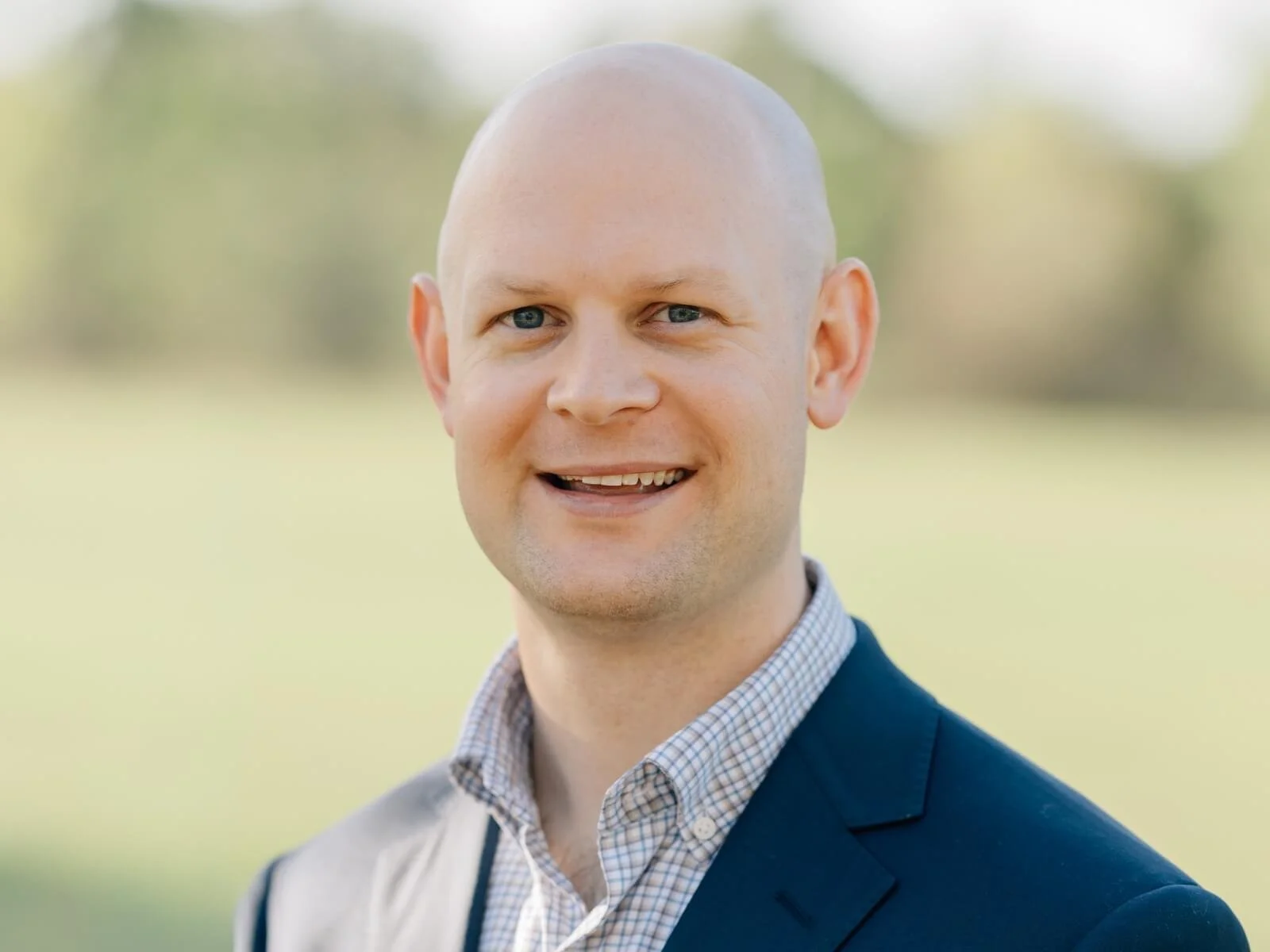
Feeling overwhelmed by financial decisions? Don't navigate your financial journey alone. Schedule a free introductory call with Tyler Day, founder of Foresight Financial Planning. We can discuss your specific needs and see if we're a good fit to help you reach your financial goals.
Foresight Financial Planning is a trade name of Day Financial Group, LLC, a registered investment adviser in the State of Georgia. Registration does not imply a certain level of skill or training. The information contained in this article is provided for educational and informational purposes only and should not be construed as personalized financial, investment, tax, or legal advice. Any references to specific securities, funds, or investment vehicles (such as Vanguard target-date funds or S&P 500 index funds) made by the interviewee are strictly for illustrative purposes and reflect his personal investment choices. These mentions do not constitute a recommendation, offer, or solicitation by Foresight Financial Planning to purchase or sell any particular security, product, or investment strategy. Readers should not assume that investments in the securities or strategies identified were or will be profitable. Any strategies, concepts, or investments discussed may not be suitable for all individuals. All investing involves risk, including the potential loss of principal, and there is no guarantee that any specific strategy will yield positive results. Every individual's financial situation is unique. Readers are strongly encouraged to consult with their own qualified financial advisor, tax professional, or legal counsel before making any financial decisions or implementing any strategies discussed herein. Insurance product guarantees are subject to the claims-paying ability of the issuing insurance company. Please consult with a licensed insurance agent regarding your specific coverage needs. Links to third-party websites are provided for convenience and informational purposes only. We do not endorse, take responsibility for, or exercise control over the content, accuracy, or privacy practices of third-party sites.
Featured Articles